Look, I've spent the last fifteen years knee-deep in concrete and dust, watching projects rise from the ground. And let me tell you, a solid connection is everything. It's not just about holding things together; it's about reliability, minimizing downtime, and frankly, peace of mind. That’s where a good custom grooved rigid coupling comes in. It's a seemingly small part, but it's a critical component in ensuring any piping system – from fire suppression to industrial processing – performs as it should, year after year. You’re not just buying a fitting; you’re investing in a system’s longevity.
I’ve seen too many projects delayed, and budgets blown, because of subpar components. These couplings aren't just about meeting specs; they’re about simplifying installation for the guys in the field. Less time wrestling with fittings means quicker project completion, and a happier crew. And a happy crew does better work. We’re talking about reducing potential leaks, improving flow rates, and ultimately, keeping things running smoothly and safely. A custom grooved rigid coupling, done right, is a foundation for a successful project.
From refineries in the Gulf Coast to water treatment plants out West, I’ve seen these systems in action. They’re not glamorous, but they’re essential. And increasingly, we're seeing a demand for customized solutions - specific materials, sizes, and configurations tailored to increasingly complex projects. This isn’t one-size-fits-all anymore. It’s about precise engineering and a commitment to quality at every connection.
The Importance of Custom Grooved Rigid Coupling
I’ve seen projects stalled, safety compromised, and budgets overrun because of a failure to appreciate the significance of reliable piping connections. A custom grooved rigid coupling isn’t just a piece of hardware; it’s a critical link in a complex system. Think of it like the foundation of a building – you can't compromise on its strength and integrity.
The demand for these couplings stems from a need for dependable, leak-proof connections, particularly in industries where fluid transfer is critical – oil and gas, water treatment, chemical processing, and fire protection. It's about preventing catastrophic failures and maintaining operational efficiency. That's why choosing the right coupling, and ensuring it’s properly installed, is paramount.
Understanding the Global Relevance
The need for reliable piping systems is universal. The UN estimates that billions of dollars are lost annually due to water leakage alone – much of that preventable with proper connections. Globally, the infrastructure gap is widening, and as nations invest in upgrading water and sanitation systems, the demand for quality couplings will only increase. The ISO standards for piping systems are becoming more stringent, driving a demand for precision engineering and higher quality materials.
We’re seeing growth in emerging markets, where infrastructure development is booming, but quality control can be a concern. This is where a robust and reliable custom grooved rigid coupling really shines, providing a level of assurance that other, cheaper options simply can’t match. And it’s not just about new builds – retrofitting existing infrastructure is a massive undertaking, and these couplings are often the ideal solution for quick, reliable repairs.
The World Bank consistently highlights the need for resilient infrastructure, and that includes the components that hold everything together. A failure in a piping system can disrupt entire communities, impacting everything from access to clean water to industrial production. Investing in quality couplings isn’t just good engineering; it’s a responsible investment in a sustainable future.
Defining Custom Grooved Rigid Couplings
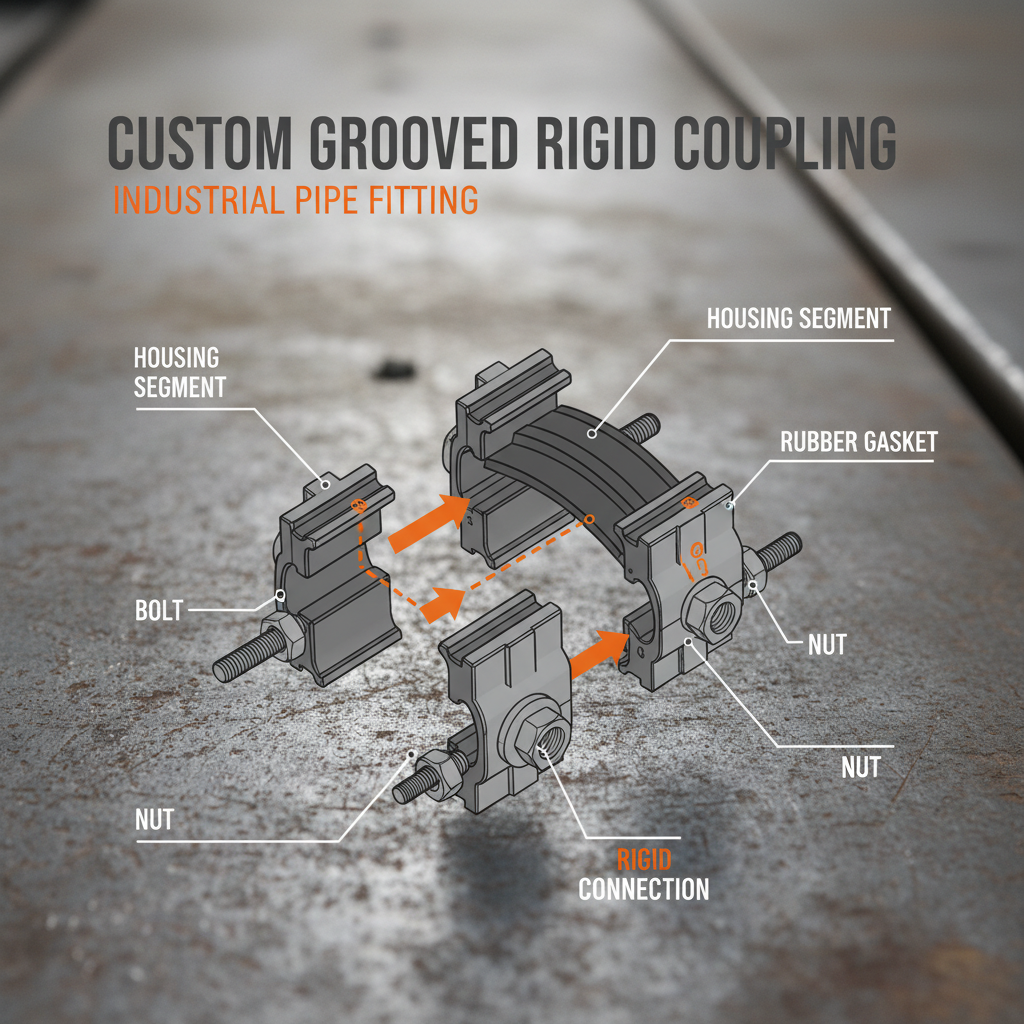
Simply put, a custom grooved rigid coupling is a mechanical pipe joining device. Unlike welding or threading, which are permanent methods, couplings provide a removable and reusable connection. The ‘grooved’ part refers to the grooves machined into the pipe ends, which accept the coupling housing and gasket. ‘Rigid’ means they are designed for systems that don't require flexibility or expansion joints.
The 'custom' aspect is where things get interesting. It means the coupling isn’t off-the-shelf. It’s engineered to specific requirements – material, size, pressure rating, and even coating – to perfectly match the application. We’re talking about everything from stainless steel for corrosive environments to specialized elastomers for high-temperature applications. It’s about precision and a tailored solution.
This isn’t just about connecting pipes; it’s about ensuring the integrity of a critical system. These couplings play a vital role in modern industry and humanitarian efforts, providing a reliable and efficient way to transport fluids and gases in a wide range of applications. From providing clean water to disaster relief zones to supporting complex industrial processes, the role is crucial.
Key Factors & Core Components
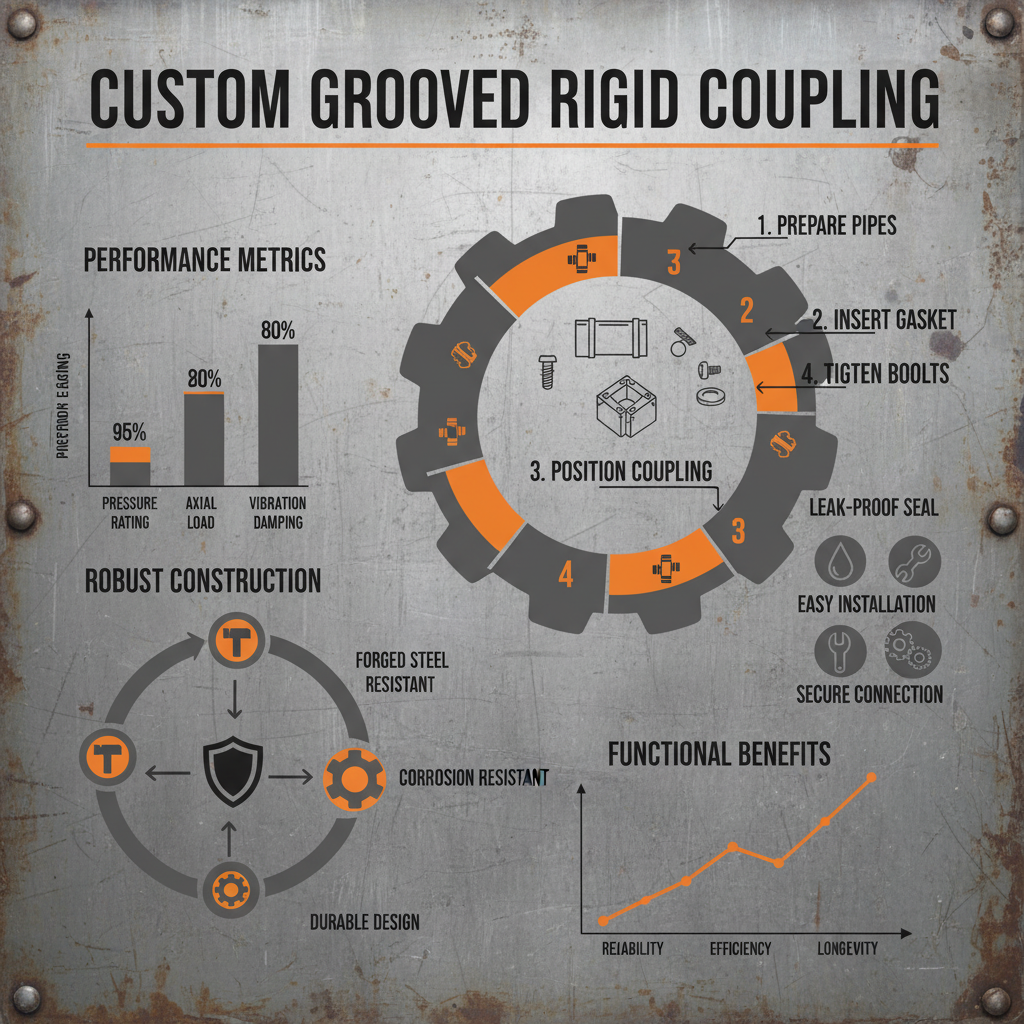
There are a few things that make a coupling truly dependable. First is Material Quality. You're dealing with potential pressure, corrosion, and extreme temperatures. Using substandard materials is a recipe for disaster. Second, Groove Accuracy. The grooves need to be precisely machined to ensure a tight, leak-proof seal. A sloppy groove is a weak link.
Then you've got Gasket Performance. The gasket is the heart of the seal. The material needs to be compatible with the fluid being transported and capable of withstanding the operating conditions. Finally, Bolt Tightening. Proper bolt tension is critical for maintaining the seal. Under-tightened bolts can lead to leaks; over-tightened bolts can damage the coupling.
Custom Grooved Rigid Coupling Performance Metrics
Global Applications & Real-World Use Cases
I’ve seen these couplings used extensively in the oil and gas industry, where reliability is paramount. They're crucial in refineries, pipelines, and offshore platforms, handling everything from crude oil to natural gas. In water treatment plants, they ensure the safe and efficient delivery of clean water to communities.
They're also vital in fire protection systems, where every second counts. A quick and reliable connection can be the difference between containing a fire and a catastrophic loss. And in post-disaster relief operations, portable water purification systems rely on these couplings for rapid deployment and dependable performance.
Advantages & Long-Term Value Proposition
The biggest benefit? Reduced downtime. A properly installed custom grooved rigid coupling minimizes the risk of leaks and failures, keeping systems running smoothly and preventing costly disruptions. From a sustainability standpoint, they’re reusable, reducing waste and minimizing the need for replacements.
And frankly, they offer peace of mind. Knowing that your connections are secure and reliable, especially in critical applications, is invaluable. It reduces risk, protects assets, and ensures the safety of personnel. That’s a value proposition you can’t put a price on.
Future Trends & Innovations in Coupling Technology
We’re seeing a push for more intelligent couplings, with integrated sensors that monitor pressure, temperature, and even detect potential leaks. Digital twins are being used to simulate performance and optimize coupling selection for specific applications. Material science is also playing a role, with the development of lighter, stronger, and more corrosion-resistant alloys.
There’s also a growing focus on automation in the installation process, with robotic systems being developed to precisely groove pipes and install couplings. This will improve efficiency, reduce errors, and lower labor costs. And of course, sustainability remains a key driver, with a focus on using recycled materials and reducing the environmental impact of manufacturing.
The integration of IoT (Internet of Things) technology into these couplings will also revolutionize maintenance practices, enabling predictive maintenance and preventing costly failures before they occur. It’s about moving from reactive to proactive maintenance.
Summary of Challenges and Solutions in Custom Grooved Rigid Coupling Applications
| Challenge |
Impact on Project |
Potential Solution |
Implementation Cost (1-10) |
| Corrosion in Harsh Environments |
Reduced Coupling Lifespan, Increased Maintenance |
Utilize Specialized Alloy Materials (e.g., Stainless Steel, Duplex) |
8 |
| Improper Installation Techniques |
Leakage, System Failure, Safety Hazards |
Mandatory Training & Certification for Installers |
6 |
| Compatibility with Different Pipe Materials |
Gasket Degradation, Connection Failure |
Selection of Appropriate Gasket Material for Pipe Type |
5 |
| High-Pressure Applications |
Coupling Deformation, Catastrophic Failure |
Employ High-Pressure Rated Couplings & Bolts |
7 |
| Lack of Traceability & Documentation |
Difficulties in Maintenance & Repair, Compliance Issues |
Implement a Robust Tracking System (e.g., QR Codes) |
4 |
| Supply Chain Disruptions |
Project Delays, Increased Costs |
Diversify Supplier Base & Maintain Safety Stock |
3 |
FAQS
The lifespan of a custom grooved rigid coupling is heavily dependent on the operating conditions. However, in a typical industrial environment with appropriate material selection and proper installation, you can expect a lifespan of 20-30 years or more. Regular inspections and maintenance, like bolt re-torqueing, can further extend this lifespan. We’ve seen couplings still in service after 40 years, but that’s not the norm – proactive maintenance is key.
While the initial material cost of a coupling might be higher than welding, the overall life-cycle cost is often lower. Welding requires skilled labor, significant downtime for cooling and inspection, and can introduce residual stress into the pipe. Couplings are faster to install, require less skilled labor, and allow for easy disassembly for maintenance or repairs. When you factor in those costs, the coupling usually comes out ahead.
We offer a wide range of materials, including carbon steel, stainless steel (304, 316, duplex), and special alloys. The right material depends on the fluid being transported, the operating temperature and pressure, and the corrosive environment. For example, stainless steel is ideal for corrosive applications, while carbon steel is often sufficient for non-corrosive applications. We can help you select the best material for your specific needs.
Generally, yes. They are compatible with steel, stainless steel, ductile iron, and even some plastics. However, it’s crucial to select the correct gasket material to ensure a proper seal and prevent corrosion. The gasket must be chemically compatible with both the pipe material and the fluid being transported. Always consult with our engineering team to confirm compatibility for your application.
Regular inspections are vital. Check for signs of corrosion, leakage, or bolt loosening. Periodically re-torque the bolts to the manufacturer’s specifications. Inspect the gasket for signs of deterioration and replace it if necessary. Keeping a log of these inspections and maintenance activities can help you identify potential problems early and prevent costly failures.
Our couplings are manufactured to meet or exceed relevant industry standards, including ISO, ASME, and API. We provide full documentation and certification upon request. We are committed to quality and ensuring our products meet the highest safety and performance standards. We also offer third-party testing and inspection services for critical applications.
Conclusion
In the end, a custom grooved rigid coupling isn’t just a component; it’s a commitment to reliability, safety, and long-term performance. From minimizing downtime to reducing maintenance costs and ensuring the integrity of critical systems, the benefits are significant. Investing in quality couplings is investing in the success of your project and the longevity of your infrastructure.
As technology advances and industries evolve, the demand for innovative coupling solutions will only grow. By embracing new materials, automation, and data-driven maintenance practices, we can continue to push the boundaries of performance and ensure that these critical connections remain strong and dependable for years to come. Visit our website at www.hebei-fitting.com to learn more about how we can help you with your piping connection needs.